01 / Pages 5–9
Plan and check
The import roadmap, responsibilities, budget, product restrictions and Australian compliance checks.
Free 54-page PDF · November 2026 edition
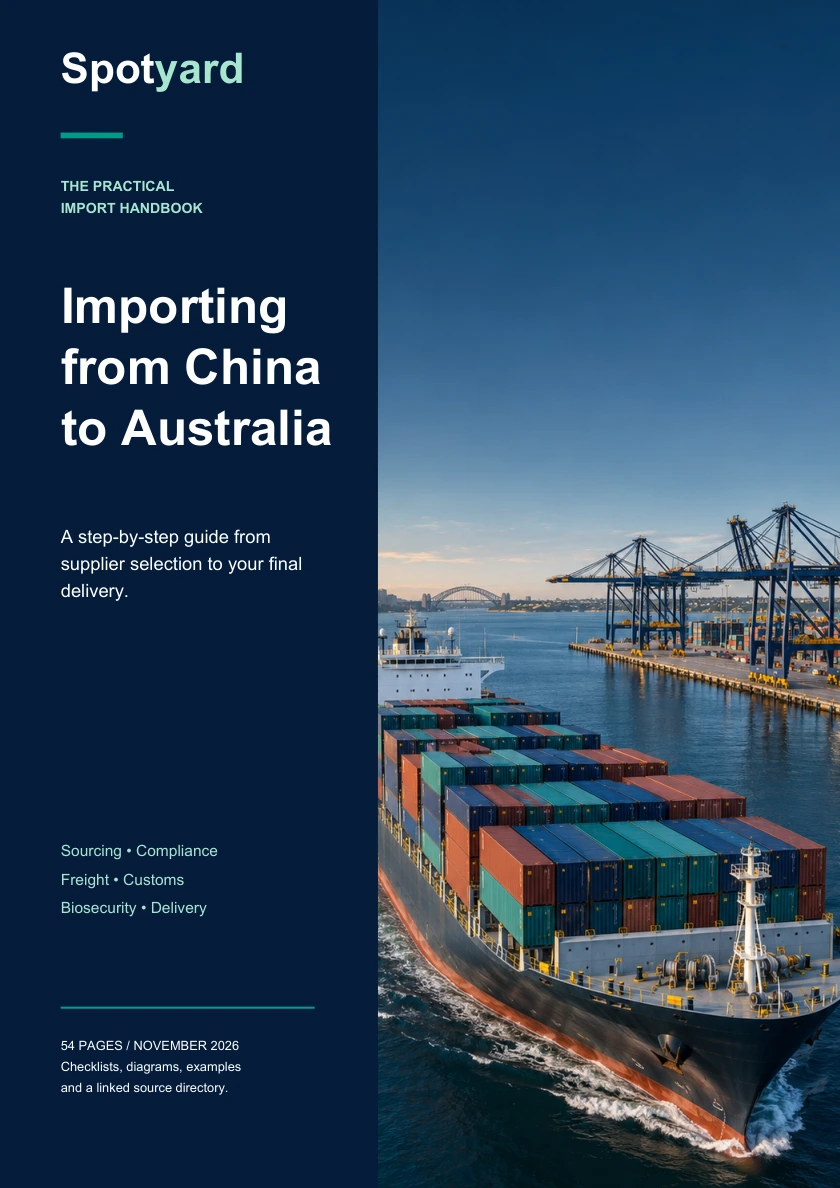
Your practical, step-by-step guide to sourcing, shipping, customs and final delivery—with checklists to help you prepare for the costs, paperwork and problems along the way.
PDF · 18.7 MB · No signup required
Know what happens next
Made for Australian business owners, builders, developers, procurement teams and online sellers, this handbook brings the process into one place. Use it to brief suppliers, ask better questions and prepare your shipment file.
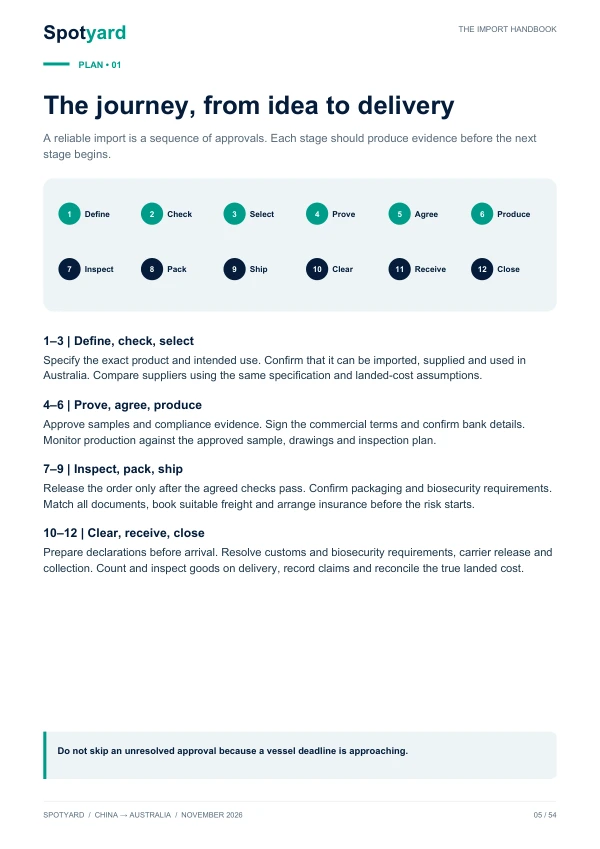
01 / Pages 5–9
The import roadmap, responsibilities, budget, product restrictions and Australian compliance checks.
02 / Pages 10–15
Supplier verification, RFQs, samples, contracts, payment milestones and fraud checks.
03 / Pages 16–21
Incoterms, landed costs, tariff classification, ChAFTA, duty and GST, with a worked example.
04 / Pages 22–33
Freight modes, packaging, biosecurity, inspections, consolidation, documents and cargo insurance.
05 / Pages 34–39
Customs and biosecurity release, port charges, unloading, receiving and inspection.
06 / Pages 40–45
Damage claims, delays, planning buffers, practical scenarios, after-sales and record keeping.
07 / Pages 46–54
Four worksheets, a glossary, 39 linked references and Spotyard contact details.
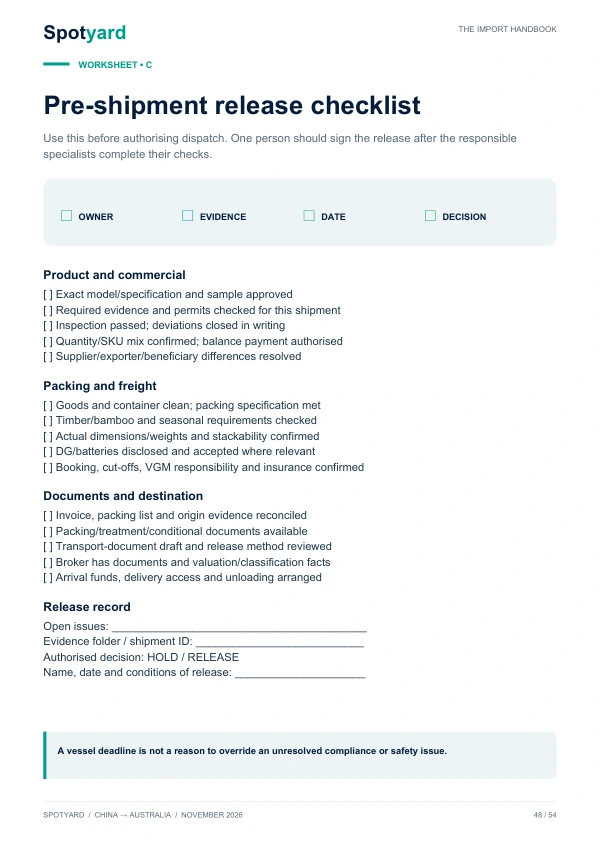
USE IT WITH YOUR TEAM
The PDF includes product and supplier approval, an RFQ and freight brief, pre-shipment checks and an arrival checklist.
Get the complete PDF →This overview follows the handbook’s order. Complete the relevant checks before moving money or cargo; the full PDF explains each stage and includes the worksheets.
Start with materials, dimensions, performance, finish, quantities and intended use. For building products, confirm the project application before choosing a product on appearance or price. A precise brief makes supplier quotes and compliance checks more useful.
Review ABF restrictions and the relevant BICON import conditions, including packaging. Identify product-specific requirements for sale or installation. Electrical, plumbing, food, chemical, medical and building products can need different evidence and specialist review.
Check the contracting business, actual factory, exporter and payment beneficiary. Compare the same specification across suppliers. Approve samples and verify important reports for the exact model; keep a record of any agreed deviations.
Put quantities, specification revisions, inspection rights, packaging, timing and remedies in writing. Choose an Incoterm with a precise named place. Confirm payment details independently, and link each payment to the agreed evidence or milestone.
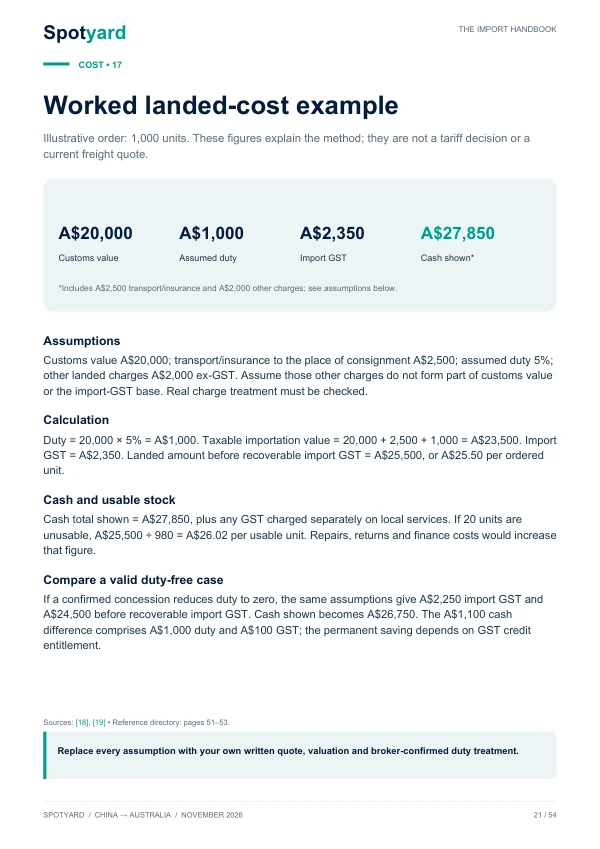
Include origin charges, freight, insurance, customs duty, GST cash flow, clearance, inspections, storage and final delivery. Compare cost per usable unit. The guide’s example shows why a factory price and a delivered cost are different numbers.
Use measurable acceptance criteria and resolve important defects before dispatch. Confirm the actual packing materials, dimensions and weights. Reconcile the commercial invoice, packing list, transport documents and conditional origin, treatment or permit evidence.
Separate booking, loading, departure, arrival and cargo availability. Give the broker complete information before arrival, arrange funds and confirm the carrier’s release requirements. Record last-free-day and empty-container deadlines rather than relying only on the ETA.
Book safe unloading, count packages and SKUs, inspect the goods and document exceptions promptly. Retain claim evidence and keep suspect stock separate. Reconcile the final import entry, actual landed cost, GST records and any supplier credits before reordering.
Practical diagrams, a worked cost example and checklists you can use alongside your purchase order.
Yes. The 54-page PDF is free to download, with no email address or account required. You can read it online or save it for your team.
Australian business owners, builders, developers, procurement teams and online sellers planning commercial purchases from China. It explains the general process and identifies when a product needs specialist checks.
Yes. It covers tariff classification, customs value, ChAFTA origin evidence and GST cash flow, with an illustrative landed-cost calculation. Actual duty, tax and concessions depend on the shipment and should be confirmed with your broker and accountant.
Yes. It includes production and freight delays, missing documents, customs and biosecurity holds, storage and container charges, unloading, damage, shortages and claims.
No. The guide provides general commercial-importing guidance. Check current requirements for the exact product, intended use, origin, packaging and route with the relevant regulator and qualified advisers.
This edition was prepared on 15 November 2026. It includes links to official guidance so readers can check current rules before ordering or shipping.
By Spotyard Sourcing & Logistics · Prepared 15 November 2026. General guidance only; requirements depend on the exact goods and can change. The handbook links to ABF, DAFF, ATO, DFAT and other relevant sources.
Start with the guide, then tell us your product, quantities, destination and target date if you need help with the next step.